Her versatility, professionalism, and zeal toward the narratives of Black and Brown communities is exciting, educational, uplifting and refreshing.
Visual and Performing Arts Manager and Curator
Her work is necessarily informed by how American history impacts our present.
Commissioning Editor, Europe
From Slavery to Mass Incarceration
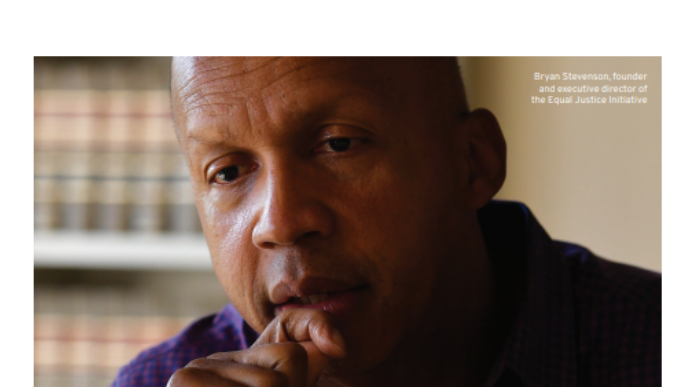
A civil rights attorney seeks to right the ramifications of a history of racism though a museum and memorial
A look at an American history of racial terror with renowned civil rights attorney Bryan Stevenson, NYT best-selling author of Just Mercy. Stevenson established the National Memorial for Peace and Justice and the Legacy Museum in Montgomery, Alabama in the spring of 2018. (Ebony)
Ben Wattenberg, wrote in his book The Birth Dearth that the main problem in the United States is the low number of White births. Wattenberg believed that White people, without a change of course, would lose the numerical majority in the U.S., and it would no longer be a White man’s land. (YES! Magazine)
Managed Out by Anti-Bias Tools: The Selective Service of Recruitment AI
“Recruitment AI builds an idealised ‘model,’ then seeks close characteristic matches. If you’re reading this while black, you already see the problem. A workforce built through AI hardens the status quo of white homogeneity where black hires just aren’t a “culture fit.” (Hat tip to every recruiter we know.)” (L’Atelier – Paris, FR)
Emmanuel Acho sits down for ‘Uncomfortable Conversations with a Black Man’
“Emmanuel Acho explained that as long as ‘the wake of slavery is still hitting [Black people]’ through various systemic injustices, there could be no equality, and by removing ‘white only’ signs, American law didn’t go far enough. The law ‘should have mandated integration.’” (The Seattle Times)
“We shall liberate all the people in the United States…All the parties on the left who consider themselves revolutionary will say that blacks are the Vanguard.” (Among Electric Literature’s ‘Favorite Essays about Radicalism and Resistance’)
On black property devaluation in a nation built with our hands, on our backs
Know Your Price: Valuing Black Lives and Property in America’s Black Cities,” by Andre M. Perry) “In the human experience, there’s a traumatic interdependence of rejection, displacement, underrepresentation and devaluation—particularly among Black people in the United States, and this can spoil our sense of stability tied to wage earning and property ownership. (Essence)
You don’t own me! ‘Made for Love’ and Our Increasingly Data-driven Relationships
The IoT, to which we’ve become wedded, is no longer a concept in some faraway Jetsons age. It’s here now, usurping personhood with intimate knowledge, accuracy, and speed that only supercomputing can deliver. (L’Atelier – Paris, FR)
A Voice from America’s Black Belt: On Bakari Sellers’: My Vanishing Country: A Memoir
Somewhere on the horizon, there’s a run to represent the people as a member of the United States Congress. But wherever his ambitions may eventually lead him, Sellers says that he is ‘never far from home’ — that is, Denmark, South Carolina, where, he writes in My Vanishing Country: A Memoir (already a New York Times best seller), beauty and blight and history are intertwined.” (Los Angeles Review of Books)
In countless ways, direct and subtle, the American media industry has kept Jim Crow alive: ‘If you’re white, you’re alright; if you’re brown, stick around; if you’re yellow, you’re mellow; but if you’re black – oh, brother! – get back, get back, get back.’ (Forbes)
On Sopan Deb and Missed Translations: Meeting the Immigrant Parents Who Raised Me
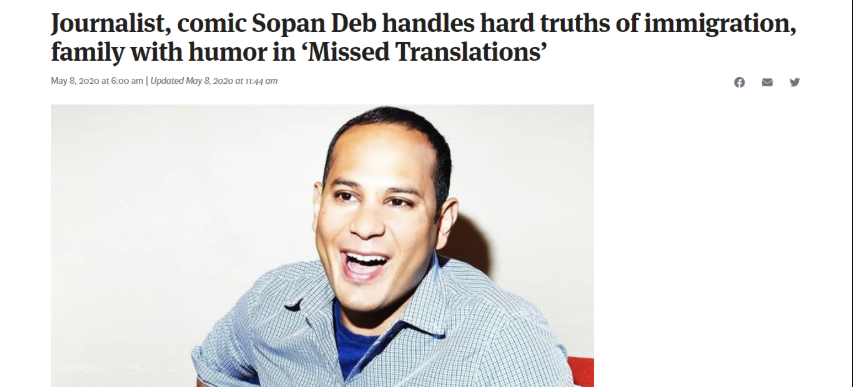
“My mother, she’s never gone on a date in her life. She’s never been proposed to,” Deb said. “She didn’t want to marry my father.” Learning this made Deb all the more empathetic toward his mother Bishakha’s plight. His parents immigrated to the United States separately and were brought together in a failed marriage. When they divorced, Deb’s father Shyamal left the family and returned to India to stay.” (The Seattle Times)
A civil rights attorney seeks to right the ramifications of a history of racism though a museum and memorial
A look at an American history of racial terror with renowned civil rights attorney Bryan Stevenson, NYT best-selling author of Just Mercy. Stevenson established the National Memorial for Peace and Justice and the Legacy Museum in Montgomery, Alabama in the spring of 2018. (Ebony)
Ben Wattenberg, wrote in his book The Birth Dearth that the main problem in the United States is the low number of White births. Wattenberg believed that White people, without a change of course, would lose the numerical majority in the U.S., and it would no longer be a White man’s land. (YES! Magazine)
Managed Out by Anti-Bias Tools: The Selective Service of Recruitment AI
“Recruitment AI builds an idealised ‘model,’ then seeks close characteristic matches. If you’re reading this while black, you already see the problem. A workforce built through AI hardens the status quo of white homogeneity where black hires just aren’t a “culture fit.” (Hat tip to every recruiter we know.)” (L’Atelier – Paris, FR)
Emmanuel Acho sits down for ‘Uncomfortable Conversations with a Black Man’
“Emmanuel Acho explained that as long as ‘the wake of slavery is still hitting [Black people]’ through various systemic injustices, there could be no equality, and by removing ‘white only’ signs, American law didn’t go far enough. The law ‘should have mandated integration.’” (The Seattle Times)
“We shall liberate all the people in the United States…All the parties on the left who consider themselves revolutionary will say that blacks are the Vanguard.” (Among Electric Literature’s ‘Favorite Essays about Radicalism and Resistance’)
On black property devaluation in a nation built with our hands, on our backs
Know Your Price: Valuing Black Lives and Property in America’s Black Cities,” by Andre M. Perry) “In the human experience, there’s a traumatic interdependence of rejection, displacement, underrepresentation and devaluation—particularly among Black people in the United States, and this can spoil our sense of stability tied to wage earning and property ownership. (Essence)
You don’t own me! ‘Made for Love’ and Our Increasingly Data-driven Relationships
The IoT, to which we’ve become wedded, is no longer a concept in some faraway Jetsons age. It’s here now, usurping personhood with intimate knowledge, accuracy, and speed that only supercomputing can deliver. (L’Atelier – Paris, FR)
A Voice from America’s Black Belt: On Bakari Sellers’: My Vanishing Country: A Memoir
Somewhere on the horizon, there’s a run to represent the people as a member of the United States Congress. But wherever his ambitions may eventually lead him, Sellers says that he is ‘never far from home’ — that is, Denmark, South Carolina, where, he writes in My Vanishing Country: A Memoir (already a New York Times best seller), beauty and blight and history are intertwined.” (Los Angeles Review of Books)
In countless ways, direct and subtle, the American media industry has kept Jim Crow alive: ‘If you’re white, you’re alright; if you’re brown, stick around; if you’re yellow, you’re mellow; but if you’re black – oh, brother! – get back, get back, get back.’ (Forbes)
On Sopan Deb and Missed Translations: Meeting the Immigrant Parents Who Raised Me
“My mother, she’s never gone on a date in her life. She’s never been proposed to,” Deb said. “She didn’t want to marry my father.” Learning this made Deb all the more empathetic toward his mother Bishakha’s plight. His parents immigrated to the United States separately and were brought together in a failed marriage. When they divorced, Deb’s father Shyamal left the family and returned to India to stay.” (The Seattle Times)